Questions & Answers
Everything you need to know about solo Bitcoin mining - the honest truth
Getting Started
The fundamentals of lottery mining
Lottery mining is solo Bitcoin mining where you try to find complete blocks on your own, without joining a pool. It's called "lottery" mining because your odds are extremely low, but if you win, you get the entire block reward (currently 3.125 BTC + transaction fees = around €380,000-450,000).
A recent Reddit user found a block with just a 5 TH/s miner and won over €400,000. They paid off their mortgage! But their odds were roughly 1 in 3,000 per year. Most lottery miners never find a block - but someone has to win.
Your chances depend entirely on your hash rate compared to the global Bitcoin network (currently ~800 EH/s). Here are realistic odds:
- 1.2 TH/s miner (like Bitaxe Gamma): ~1 in 15,000 chance per year
- 5 TH/s miner: ~1 in 3,600 chance per year
- 100 TH/s setup: ~1 in 180 chance per year
These are terrible odds! But they're real - people do win. It's genuinely like buying lottery tickets, except your "tickets" are hashes and you get millions of attempts per second.
No, lottery mining is NOT profitable in the traditional sense. Let's be honest:
- A small 1.2 TH/s miner costs ~€100 and €13/year in electricity
- Your odds of finding a block: ~1 in 15,000 per year
- Expected value: Negative (you'll likely never win)
- Pool mining the same hardware earns €2-3/month but costs €1-2/month in electricity
Lottery mining is about the thrill and possibility, not steady income. Think of it as entertainment with a tiny chance of a huge payout, not as an investment.
No! A block is not 1 Bitcoin. When you find a block, you currently receive:
- Block subsidy: 3.125 BTC (after the 2024 halving)
- Transaction fees: 0.1-0.5+ BTC typically
- Total reward: ~3.5-4 BTC per block
At current Bitcoin prices (~€95,000-130,000), finding one block means winning €380,000-€450,000! That's why it's worth trying even with terrible odds. The Bitcoin subsidy halves every 4 years, so it was 50 BTC in 2009-2012, 25 BTC in 2012-2016, etc. Early miners could earn dozens of Bitcoin per day on a laptop.
Hardware & Setup
Choosing and configuring your mining equipment
For hobby lottery mining, we recommend small ASIC miners:
- Bitaxe Gamma 601 - 1.2 TH/s, 18W, library-quiet, €90-100
- Bitaxe Supra - 4.2 TH/s, 90W, quiet, €280-300
- Used Antminer S9 - 13.5 TH/s, 1400W, sounds like a jet engine, €150-200
DO NOT use your regular computer - CPUs and GPUs are millions of times slower than ASIC miners for Bitcoin. A laptop trying to mine Bitcoin would take millions of years to match one hour of a small ASIC.
For Bitcoin mining, ASICs (Application-Specific Integrated Circuits) completely dominate:
- Your Mac/PC CPU: ~0.00001 TH/s - would take millions of years
- Gaming GPU: ~0.0001 TH/s - still millions of times too slow
- Small ASIC miner: 1-5 TH/s - actual chance (tiny, but real)
- Industrial ASIC: 100+ TH/s - best odds for hobby miners
ASICs are chips designed to do only one thing: calculate SHA-256 hashes for Bitcoin mining. They do it millions of times faster and more efficiently than general-purpose hardware. Don't waste time with CPU/GPU mining for Bitcoin.
It varies dramatically by model:
- Bitaxe Gamma (18W): 35-45 dB - library quiet, bedroom-friendly
- Small hobby miners: 40-55 dB - quiet hum, like a desktop PC
- Antminer S9 (1400W): 75-80 dB - jet engine, ear protection needed
- Antminer S19 (3500W): 80-85 dB - industrial leaf blower
This is one reason to host with us - large miners are too loud for residential use. Small hobby miners are quiet enough to keep at home, but hosting eliminates heat, noise, and electricity concerns entirely.
For expensive miners (€1,000+): Maybe, if you can save €300-500+
For cheap miners like Bitaxe (€100): No, not worth the risk.
Risks with used miners:
- No warranty
- Unknown mining hours (may have run 24/7 for years)
- Worn fans, degraded thermal paste
- Could die shortly after purchase
If you find a used Bitaxe for €40 (50% off), it might be worth it. But saving €20-30 isn't worth the risk of it dying early and losing months of lottery chances. For small miners, buy new.
Both have pros and cons. For Bitaxe Gamma 601 specifically:
AliExpress (€85 + €19 shipping = €104):
- ✅ Cheapest option
- ✅ Often 180-day warranty
- ✅ 2-3 week delivery to EU
- ⚠️ Check seller ratings (98%+ with 50+ sales)
- ⚠️ Potential clones/low quality if not careful
Official resellers like DTV Electronics (€101 + €18 shipping = €119):
- ✅ Guaranteed authentic
- ✅ Better customer support
- ✅ Easier returns
- ⚠️ €15-20 more expensive
Our recommendation: For your first miner, buy from an official reseller for peace of mind. If you're buying multiple miners or know what to look for, AliExpress can save you money - just verify seller reputation carefully.
NerdMiner V2 is NOT for actual mining! It's an educational/novelty device.
- NerdMiner V2: 0.00005 TH/s, odds: 1 in 360 MILLION per year
- Bitaxe Gamma: 1.2 TH/s, odds: 1 in 15,000 per year
- Difference: Bitaxe is 24,000x faster!
NerdMiner is 24,000 times slower than a cheap Bitaxe. You would need to run it for 360 million years to have a decent chance of finding one block. It's like buying one lottery ticket per century instead of one per day. Buy it for learning/fun, NOT for actually finding blocks. For real lottery mining, you need an actual ASIC like the Bitaxe.
Strategy & Optimization
Making the most of your setup
Your odds scale linearly with hash rate, but so do your costs:
- 1x Bitaxe (1.2 TH/s): €84 year 1, odds: 1 in 15,000/year
- 2x Bitaxe (2.4 TH/s): €167 year 1, odds: 1 in 7,500/year (2x better)
- 5x Bitaxe (6 TH/s): €415 year 1, odds: 1 in 3,000/year (5x better)
- 100 TH/s setup: €7,000+ year 1, odds: 1 in 180/year
Diminishing returns: Even with 100 TH/s (€7,000+ investment), you still only have 1 in 180 chance per year - 99.4% chance you'll never win. Our recommendation: Start with 1-2 small miners (€84-167). See if you enjoy it. If you want better odds later, add more. But remember - even scaling up 100x still leaves you with lottery-ticket odds. Don't invest what you can't afford to lose.
For small miners: No, absolutely not worth it.
Example with Bitaxe Gamma (18W):
- Electricity cost: €13/year
- Solar setup cost: €200-350 (panel + battery + controller)
- Payback time: 15-25 years (by then the solar panel is dead!)
Only consider solar if you have a large setup (3000W+) where electricity costs €2,000+/year. For hobby miners, just plug it in and pay the €1/month. Any optimization attempt costs more than you'll save.
Technically yes (using smart plugs/automation), but it doesn't make sense for small miners.
Example with Bitaxe Gamma on Nord Pool prices:
- Mining 24/7: €13.56/year, odds: 1 in 15,000/year
- Mining only 12 cheapest hours/day: €6/year, odds: 1 in 30,000/year
- Savings: €7.56/year, but you cut your lottery chances in HALF
Is saving €7.56/year worth halving your already-terrible odds? No! This ONLY makes sense for large miners burning €2,000+/year in electricity. For hobby miners, just run 24/7 and forget about it. You're buying a lottery ticket - don't reduce your chances to save the cost of a coffee per month.
Free electricity changes the equation significantly, but doesn't make it "profitable":
With free electricity:
- Upfront cost: €100 for Bitaxe Gamma
- Ongoing cost: €0
- Odds: Still 1 in 15,000 per year
- Pool mining earnings: €3-4/month (€36-48/year)
Pool mining: With free electricity, you could earn €36-48/year steadily. Payback in 2-3 years, but extremely boring for such small returns.
Solo mining: After the initial €100, it's literally a free lifetime lottery ticket. You'll probably never win, but why not? That €100 buys you years of tiny hope for life-changing money.
Our take: With free electricity, solo mining makes more sense than pool mining. Why earn €4/month when you could hit the €400k jackpot? It's still gambling, but at least it's free gambling after the initial hardware cost.
This is a common thought - "it's already plugged in, might as well use it!" But it doesn't work:
- Your Mac idle: 10-20W, doing nothing
- Your Mac mining: 80-150W, running at 100% constantly
- Extra electricity cost: €5-10/month
- Earnings: Maybe €0.10-0.50/month
- Hardware damage: Running 24/7 at max load destroys your Mac faster
Your Mac would hash at ~0.00001 TH/s vs a Bitaxe's 1.2 TH/s - that's 120,000x slower! Your Mac would take literally millions of years to do what a small ASIC does in one year. Don't mine on general-purpose computers. Bitcoin mining requires specialized ASIC hardware.
Hosting Services
Let us handle the infrastructure
Estonia offers several advantages for hosting mining hardware:
- Competitive electricity rates: Average ~€87/MWh (8.7 cents/kWh) via Nord Pool
- Closer to China: Lower shipping costs for ASIC hardware from manufacturers
- Reliable infrastructure: Good internet connectivity and stable power
- EU location: Easier logistics and no customs hassles for EU customers
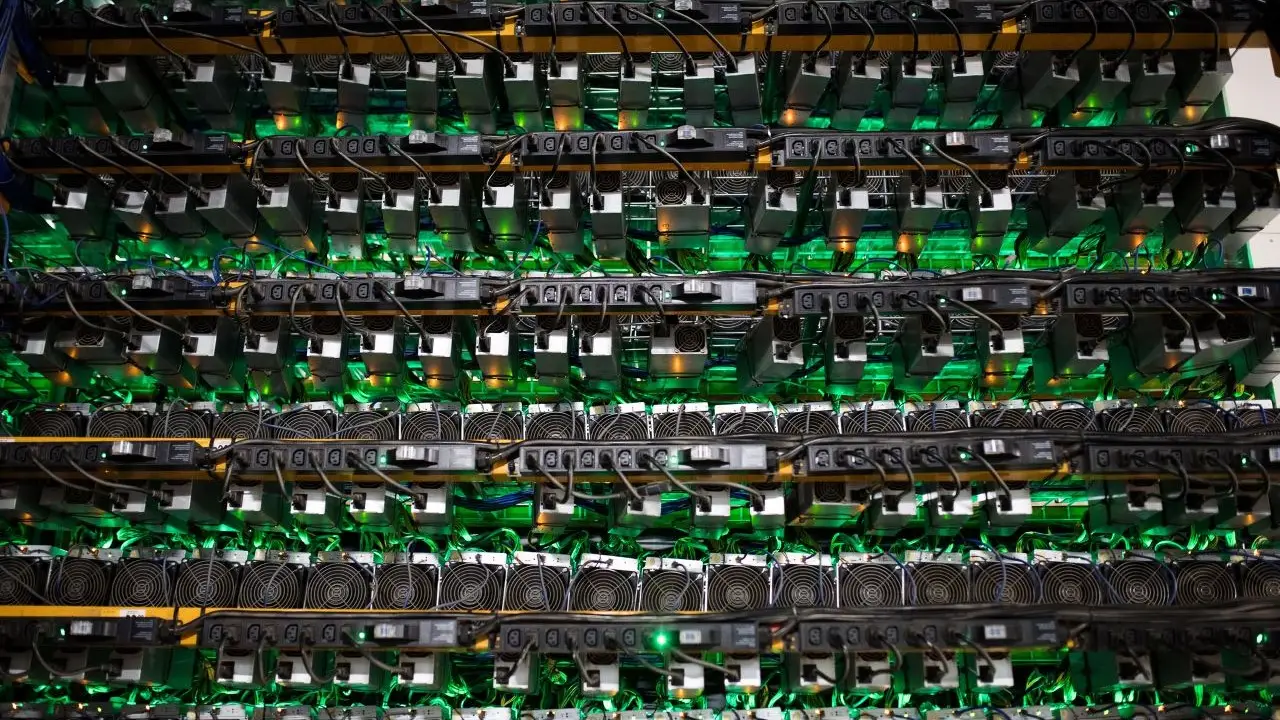
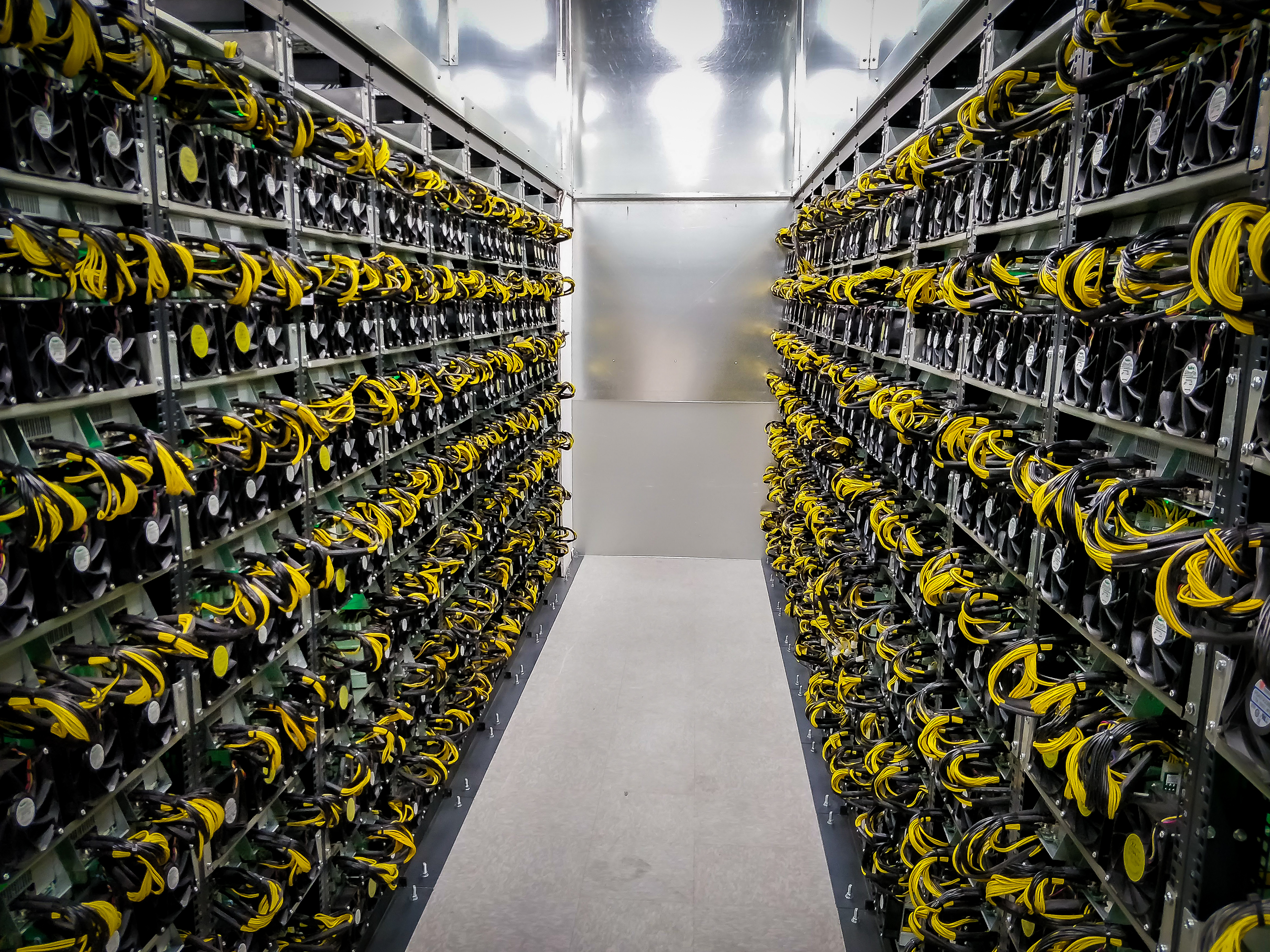
Our hosting service means you don't need to worry about noise, heat, or electricity costs at home. Your miner runs 24/7 in our facility while you monitor it via our dashboard.
Technical Understanding
How mining actually works
Bitcoin difficulty adjusts every 2 weeks to keep blocks at ~10 minute intervals. As more miners join or hardware improves, difficulty increases, making your odds worse:
- Your 1.2 TH/s miner has fixed performance
- But global hash rate keeps growing (currently ~800 EH/s)
- Your odds decrease over time as difficulty rises
- What's 1 in 15,000 today might be 1 in 20,000 next year
This is the arms race of mining. Your hardware doesn't slow down, but everyone else is adding more hash power, so your relative chance keeps shrinking. Eventually older miners become essentially worthless for solo mining.
The 10-minute average is a hard network limit, not your personal limit.
How it works:
- Bitcoin blocks form a chain - each block builds on the previous one
- You can't mine block #920,441 until someone finds block #920,440
- When someone finds a block, it broadcasts to the network (~few seconds)
- Everyone immediately starts working on the next block
Could you find multiple blocks in a row? Theoretically yes, if you got impossibly lucky. You could find block #920,440, immediately start on #920,441, and find that too. But then you're back to competing with the entire network for #920,442. You cannot find blocks faster than the network produces them (average 10 minutes globally).
No! It's more like gold panning than racing.
Why it's NOT a race:
- In a race, only the first person wins - there's no second place
- In mining, if someone else finds block #920,440 first, you immediately start working on #920,441
- Every ~10 minutes, a new block becomes available for ANYONE to find
- You're not competing to beat someone to a specific block - you're all independently searching
Better analogy: Imagine millions of people gold panning in the same river. Every 10 minutes, exactly one gold nugget appears somewhere randomly. The person with the industrial dredge makes 100,000x more attempts than you with your hand pan, so they're much more likely to find it. But when that nugget appears, it could appear in anyone's pan based on who made the right attempt at the right microsecond. That's how that small 5 TH/s miner found a block - they just happened to pan the right spot at the right moment.
The evolution of cryptocurrency mining:
- 2009-2010: CPU mining (laptops could mine Bitcoin)
- 2010-2013: GPU mining (graphics cards 100x faster than CPUs)
- 2013-present: ASIC mining for Bitcoin (millions of times faster than GPUs)
- 2015-2022: GPUs still good for Ethereum mining
- 2022: Ethereum switched to proof-of-stake (no more mining)
"Used mining GPUs" flooded the market in 2022 when Ethereum mining ended. These cards ran 24/7 for years at maximum temperature. They're not useless, but need maintenance (new thermal paste, fans) and have shortened lifespans. For Bitcoin specifically, GPUs haven't been viable since 2013 - ASICs completely dominate now.
Early Bitcoin mining (2009-2013) was a completely different world:
- Block reward: 50 BTC per block (vs 3.125 BTC today)
- Difficulty: Trivial - anyone could mine on a laptop
- Competition: Almost none - most people didn't know about Bitcoin
- Price: Pennies to a few dollars (vs €95k-130k today)
In 2010, someone paid 10,000 BTC for two pizzas (worth over €1 billion today!). Early miners could find dozens of blocks per week on regular laptops and accumulate thousands of Bitcoin. Many lost their wallets, threw away hard drives, or sold when Bitcoin hit €10 thinking they were geniuses. Those who held onto even a few hundred Bitcoin from early mining are now sitting on generational wealth. Today, with 800 EH/s network hashrate and industrial competition, those days are long gone. But lottery mining keeps the dream alive with a tiny possibility.
Still Have Questions?
Join our waitlist to get notified when we launch. We'll send you detailed guides and exclusive early-bird pricing on hosting services.